The Science of Sight

The eye is not a camera โ€” it is the beginning of an illusion. Discover how your brain constructs reality, and why everything you see may be a sophisticated lie.

130M+
Photoreceptors in each retina
576MP
Equivalent megapixels of human vision
65%
Brain processing dedicated to vision
0.1s
Brain lag in visual processing
10M
Distinct colors the eye can detect

The Anatomy of Sight

Vision begins the moment light reflects off the world around you and enters your eye through the cornea โ€” a transparent, curved dome that provides roughly 65% of the eye's total focusing power before light even reaches the lens.

From there, the journey inward is one of biological precision: light is regulated, filtered, flipped upside down, converted from photons into electrical impulses, and finally reconstructed by your brain into the seamless world you believe you are seeing.

Seeing is not something your eyes do. It is something your brain invents.

โ€” Neuroscience of Perception

The retina โ€” a thin layer at the back of your eye โ€” contains over 130 million photoreceptors in two forms: rods (for low-light and motion) and cones (for color and fine detail). Yet the optic nerve that carries this data to your brain has only about 1 million fibers. Your brain must fill in the gaps โ€” and it does so by guessing.

Light Cornea Lens Iris Pupil Sclera Optic Nerve Fovea Cross-section of the human eyeball โ€” simplified diagram
๐Ÿ”ต
The Cornea
The transparent front dome of the eye. Provides approximately 65% of the eye's total refractive (focusing) power. No blood vessels โ€” nourished by tears and aqueous humor.
๐ŸŸค
The Iris & Pupil
The iris is a muscular diaphragm that controls pupil size from 1.5mm (bright light) to 8mm (darkness), regulating light intake by a factor of up to 30x.
๐Ÿ”ฎ
The Lens
A flexible, transparent biconvex structure that fine-tunes focus via accommodation โ€” changing shape to focus objects from 10cm to infinity. It flips the image upside-down.
๐ŸŒ
The Retina
A 0.5mm thick layer of neural tissue containing 120 million rods (motion/low-light) and 6โ€“7 million cones (color/detail). The fovea โ€” a tiny pit โ€” contains the highest cone density for sharp central vision.
โšก
The Optic Nerve
A bundle of ~1 million nerve fibers carrying electrical signals from the retina to the visual cortex. The point where it connects to the retina creates your natural blind spot โ€” which the brain fills in.
๐Ÿง 
The Visual Cortex
Located in the occipital lobe, it processes about 65% of the brain's total neural bandwidth. It does not passively receive images โ€” it actively constructs, predicts, and reconstructs visual reality.

How Seeing Becomes Believing

Here is the critical insight that power structures have exploited for millennia: you do not see with your eyes. You see with your brain. The eyes are merely input devices โ€” biological sensors that convert photons into electrical signals. The brain does the rest.

And the brain cheats. It fills in blind spots. It ignores peripheral distortions. It uses context, memory, and expectation to construct a model of reality โ€” not a recording of it. When those shortcuts are deliberately manipulated, the result is an illusion. And when an entire civilization's perceptions are managed through media, symbols, and architecture, the result is something far more powerful.

Step 1
Light Enters
A photon strikes the cornea. The curved surface bends it toward the lens. Pupil size has already adjusted to the ambient light level โ€” a process taking 200โ€“400 milliseconds.
Step 2
The Lens Focuses
The lens refracts the incoming light, projecting an inverted, reversed image onto the retina. The brain will later flip and correct this image without your awareness.
Step 3
Photoreceptors Fire
Photons trigger photochemical reactions in rod and cone cells. Opsins โ€” light-sensitive proteins โ€” change shape, triggering electrical signals. Each cone is tuned to red, green, or blue wavelengths.
Step 4
Signal Compression
130 million photoreceptors feed data into ~1 million optic nerve fibers. Massive compression occurs. The retina performs initial edge-detection and contrast enhancement before the signal leaves the eye.
Step 5
Brain Reconstruction
Signals reach the visual cortex via the lateral geniculate nucleus. Multiple specialized regions process color, motion, depth, faces, and objects in parallel. The brain assembles these streams into a single coherent scene โ€” with a 100ms delay.
Step 6
Consciousness Receives the Story
What you "see" is not what happened 100ms ago โ€” it is the brain's best predictive model of the present, stitched together from past experience, expectation, and incomplete data. Reality, as you experience it, is a hallucination that happens to match the world most of the time.

The Three Categories of Illusion

When the brain's shortcuts are exploited โ€” whether through art, architecture, media, or deliberate manipulation โ€” the result is an illusion. Science classifies these into three fundamental categories, each revealing a different vulnerability in the human perceptual system.

01
Literal Illusions
A single image contains multiple valid interpretations. The eyes gather the raw data correctly, but the brain can only commit to one interpretation at a time โ€” causing an alternating "switching" effect between two equally valid truths.
This is the perceptual equivalent of cognitive dissonance: reality contains two truths simultaneously, but the mind forces you to choose one.
  • Rubin's Vase โ€” vase or two faces?
  • Necker Cube โ€” which face is in front?
  • Duck-Rabbit โ€” which animal do you see first?
  • The Young/Old Woman โ€” age depends on focus
02
Physiological Illusions
Caused by overstimulation or imbalances at the hardware level โ€” within the eye and early neural pathways โ€” before the brain even begins conscious interpretation.
  • Lateral Inhibition: Active neurons suppress neighbors to sharpen edges, creating phantom spots in grid patterns (Hermann Grid).
  • Afterimages: Overstimulated cones become fatigued; complementary colors appear when you look away.
  • Apparent Motion: Rapid saccadic eye movements overwhelm the visual cortex, making static patterns appear to move (Rotating Snakes).
  • Flicker Fusion: Above ~60Hz, the eye cannot distinguish individual frames โ€” the basis of all cinema and television.
03
Cognitive Illusions
The deepest category โ€” exploiting the brain's learned rules about the 3D world, context, and meaning. The eye sees correctly, but the brain applies the wrong interpretive framework.
  • Geometric-Optical: Size and length are misjudged due to depth cues (Mรผller-Lyer, Ponzo illusions).
  • Filling-In: The brain completes shapes that don't exist using pattern completion (Kanizsa Triangle).
  • Color Constancy: The brain adjusts perceived color based on ambient light assumptions (The Dress; Checker Shadow).
  • Perceptual Sets: Prior expectation determines what you see. Told to look for a face, you find faces in random patterns.

See Your Brain Lie to You

These demonstrations are not tricks of the eye โ€” they are proof of how your brain constructs reality. Each one reveals a specific vulnerability in the human perceptual system.

Physiological โ€” Apparent Motion
Rotating Snakes: Stare at the center, then slowly move your eyes. The rings appear to rotate. This is caused by microsaccades โ€” tiny involuntary eye movements โ€” triggering motion-detection neurons in your visual cortex.
Cognitive โ€” Color Constancy
Checker Shadow: The two highlighted squares are the exact same shade of grey. The brain adjusts perceived brightness based on surrounding shadow context โ€” making identical values appear completely different.
Physiological โ€” Lateral Inhibition
Hermann Grid: Ghost grey spots appear at the intersections of white lines โ€” except the one you're directly looking at. Lateral inhibition in retinal ganglion cells creates phantom dark blobs your eye never actually receives.

The Eye as Metaphor

The All-Seeing Eye โ€” the capstone symbol on the unfinished pyramid โ€” is not merely a religious or occult motif. It is, read literally, a declaration about the nature of perception and control.

Those who understand how the brain constructs reality โ€” who grasp the mechanisms of lateral inhibition, filling-in, color constancy, and perceptual sets โ€” also understand that reality itself can be constructed for others. A population that does not know its visual system is a prediction machine, running on assumptions, is a population that can be shown things that are not there.

The title The Eye Is I is a precise statement: the observer is the constructed, not the constructor. When you understand how your eye works, you begin to understand how the world you see has been designed for you to see it in a particular way.

None are more hopelessly enslaved than those who falsely believe they are free.

โ€” Johann Wolfgang von Goethe

๐Ÿ”บ
The Pyramid & The Eye
The unfinished pyramid with a floating eye above it is a symbol of hierarchical control over perception. The eye sees all โ€” but the base never sees the eye. The separation is architectural.
๐Ÿ“บ
Flicker Fusion & Mass Media
At 24โ€“30 frames per second, individual images fuse into seamless motion in the human visual system. Every film, broadcast, and screen exploits this physiological threshold to make constructed narratives feel like uninterrupted reality.
๐Ÿ›๏ธ
Architecture of Illusion
Gothic cathedrals, government buildings, and financial centers are designed using forced perspective โ€” vertical exaggeration, converging lines, and scale manipulation โ€” to trigger the brain's depth-and-dominance processing centers.

The Science, Backed by Evidence

Every claim on this page is backed by decades of neuroscience research. These videos take you directly into the labs, the lectures, and the demonstrations that prove the eye is not what you think it is โ€” and that your brain is constructing your reality right now.

I. How the Eye Works

The Visual System: How Your Eyes Work
▶
The Visual System: How Your Eyes Work
A complete walkthrough of the eye's anatomy โ€” cornea, lens, retina, rods, cones, and the optic nerve pathway to the visual cortex. The full signal chain from light to perception.
Vision Crash Course
▶
Vision: Crash Course Anatomy & Physiology
In-depth anatomy of sight. Covers phototransduction โ€” how photons trigger electrical signals in rods and cones โ€” and why the brain inverts and reconstructs the image it receives.
Brain Fills in Blind Spot
▶
How Your Brain Fills in the Gaps
Your eye has a natural blind spot where the optic nerve connects. You never notice it because the brain silently fabricates what should be there. You are already living in a constructed reality.

II. The Science of Optical Illusions
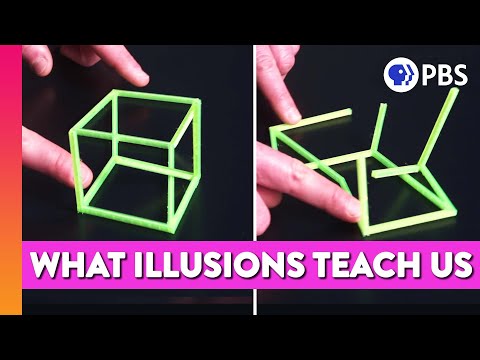
9 Illusions Brain Creates Reality
▶
9 Illusions That Explain How Your Brain Creates Reality
Nine demonstrations proving the brain doesn't record reality โ€” it constructs it. Covers the Mรผller-Lyer, Checker Shadow, Motion aftereffect, and more with the neuroscience behind each one.
8 Mind-Blowing Optical Illusions
▶
8 Mind-Blowing Optical Illusions Explained
Eight optical illusions explained with the science behind them โ€” lateral inhibition, color constancy, depth cue exploitation, and the brain's pattern-completion shortcuts that can be deliberately fooled.
Lateral Inhibition Explained
▶
Lateral Inhibition: The Ghost Spots in Your Vision
The mechanism behind the Hermann Grid illusion. Active neurons suppress their neighbors to sharpen edges โ€” but this creates phantom images your retina never actually received from the world.

III. The Brain Constructs Reality
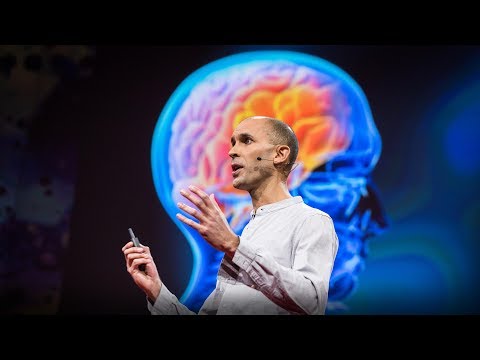
Your Brain Hallucinates Your Conscious Reality
▶
Your Brain Hallucinates Your Conscious Reality
Neuroscientist Anil Seth at TED: Consciousness is a controlled hallucination. The brain doesn't passively receive the world โ€” it actively predicts and constructs it. This is what The Eye Is I means.
Propaganda and Manipulation
▶
Propaganda & How Mass Media Distorts Perception
The same cognitive vulnerabilities exploited by optical illusions โ€” perceptual sets, priming, and expectation โ€” are applied at civilizational scale through media, repetition, and framing to shape what billions believe is real.
How Your Brain Fills in Blind Spots
▶
How Your Brain Fills in Blind Spots
Beyond the physical blind spot โ€” the brain fills in cognitive blind spots too. Prior beliefs, emotional state, and cultural programming determine what the visual cortex "decides" to see.

Sources & Further Reading

  1. Kandel, E.R. et al. Principles of Neural Science (5th ed.). McGraw-Hill, 2013.
  2. Gregory, R.L. "Visual Illusions." Scientific American, 219(5):66โ€“76, 1968.
  3. Adelson, E.H. "Lightness Perception and Lightness Illusions." The New Cognitive Neurosciences, 339โ€“351, 2000.
  4. Seth, A.K. "Being a Beast Machine: The Somatic Basis of Selfhood." Trends in Cognitive Sciences, 2021.
  5. Hubel, D.H. & Wiesel, T.N. "Receptive fields of single neurones in the cat's striate cortex." Journal of Physiology, 148(3):574โ€“591, 1959.
THE EYE IS I